

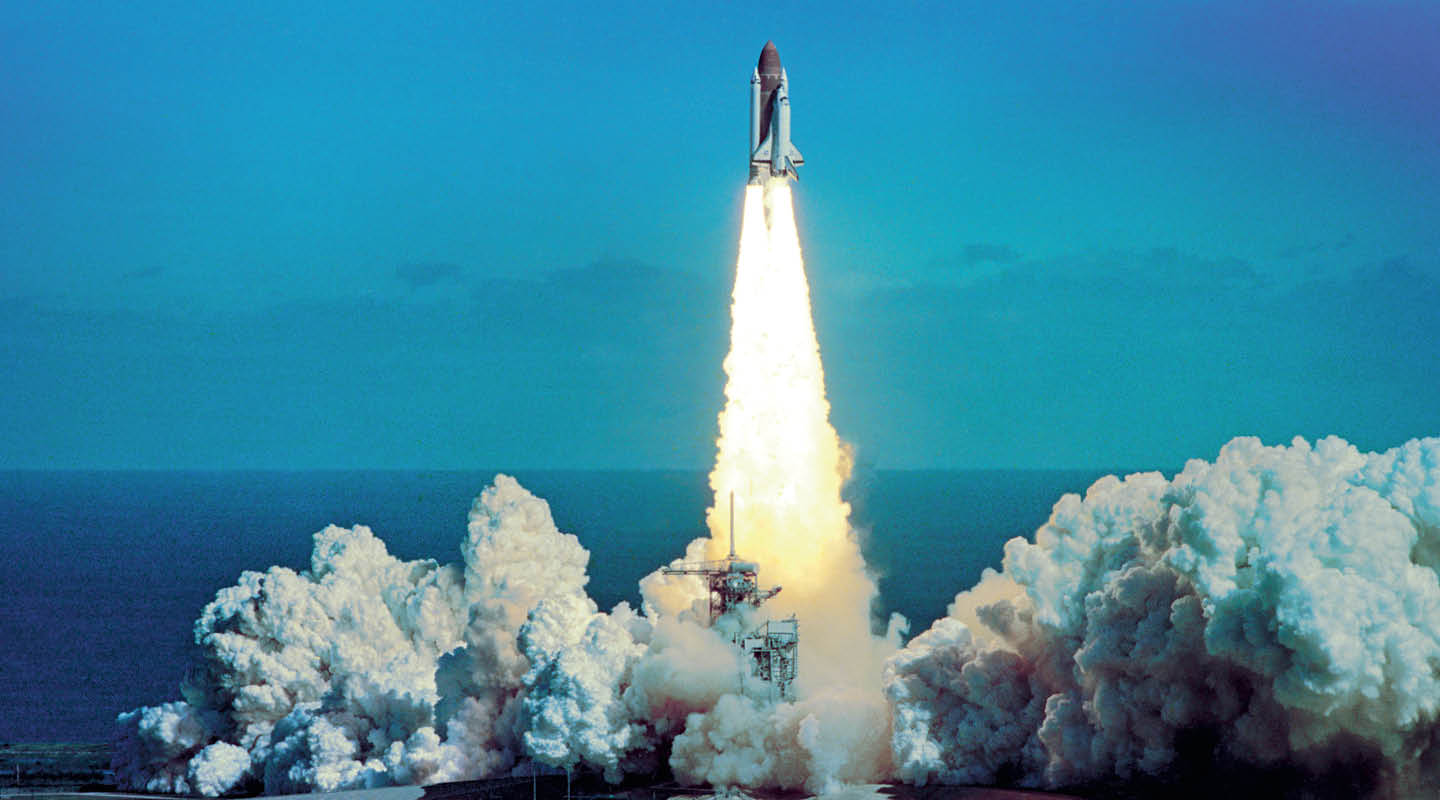

Thom Baur/AP Images

CCSS

R.1, R.2, R.3, R.4, R.7, W.2, SL.1, L.4, L.6

Standards

Disaster in the Sky

How the 1986 Challenger disaster shook the nation 

Before You Read: Check out our Background Builder slideshow


10, 9, 8, 7 . . .

    It was January 28, 1986. The morning was unusually chilly for Florida. The space shuttle Challenger was about to blast off. Seven crew members were strapped into their seats. 

    In many ways, this would be a typical mission. The American space shuttle program was now in its 14th year. The Challenger would be launched into space. It would orbit Earth and land back on the ground. 

    But there was something different about this mission. 

    One of the astronauts wasn’t actually an astronaut. Her name was Christa McAuliffe. She was a 37-year-old high school teacher from New Hampshire. And she was the first private citizen chosen for a space mission.

    The whole country was excited. Just imagine! A teacher going to space! Kids in classrooms sat in front of TVs. Crowds gathered outside the launch site in Florida. Everyone got ready for what would surely be a thrilling moment. 

    At 11:38 a.m., the rockets fired. The shuttle rose slowly at first. It gained speed, rising higher and higher in the winter sun.  

    Then disaster struck.

    Fire shot out from one of the rockets. A fuel tank exploded.

    On the ground, people were confused. Then the awful truth became clear: The Challenger had been destroyed. 

    All seven crew members had been lost.

    How could this have happened?

10, 9, 8, 7 . . .

    It was January 28, 1986. The morning was unusually cold for Florida. The space shuttle Challenger was about to blast off. Seven crew members were strapped into their seats.

    In many ways, this was a normal mission. The American space shuttle program was in its 14th year. The Challenger would be launched into space. It would orbit Earth and then land.

    But there was something different about this mission.

    One crew member wasn’t an astronaut. Her name was Christa McAuliffe. She was a 37-year-old teacher from New Hampshire. She was the first private citizen chosen for a space mission.

    The whole country was excited. Just imagine! A teacher going to space! Kids in classrooms sat in front of TVs. Crowds gathered outside the launch site in Florida. Everyone got ready for a thrilling moment.

    At 11:38 a.m., the rockets fired. The shuttle rose slowly at first. Then it sped up. It rose higher and higher in the air.

    Then disaster struck.

    Fire shot from one of the rockets. A fuel tank exploded.

    On the ground, people were confused. Then they understood: The shuttle had been destroyed. All seven crew members had died.

    How could this have happened?

10, 9, 8, 7 . . .

    It was January 28, 1986. The morning was unusually chilly for Florida. The space shuttle Challenger was about to blast off. Seven crew members were strapped into their seats.

    In many ways, this would be a typical mission. The American space shuttle program was now in its 14th year. The Challenger would be launched into space. It would orbit Earth and land back on the ground.

    But there was something different about this mission.

    One of the astronauts, Christa McAuliffe, wasn’t actually an astronaut. She was a 37-year-old high school teacher from New Hampshire, and she was the first private citizen chosen for a space mission.

    The entire country was excited. Just imagine! A teacher going to space! Kids in classrooms sat in front of TVs, and crowds gathered outside the launch site in Florida. Everyone got ready for what would surely be a thrilling moment.

    At 11:38 a.m., the rockets fired. The shuttle rose slowly at first. It gained speed, rising higher and higher in the winter sun.

    Then disaster struck.

    Fire shot out from one of the rockets. A fuel tank exploded.

    On the ground, people were confused. Then the awful truth became clear: The Challenger had been destroyed.

NASA

A Teacher in Space
Here Christa McAuliffe, a teacher, trains for the Challenger mission. She was the first private citizen to be chosen for a space mission.

Exploring Space

    Humans have always been amazed by space. But sending a person into space wasn’t possible until the mid-1900s. It took hard work from many experts in math, science, and engineering. In 1958, the U.S. government created the National Aeronautics and Space Administration (NASA). Its mission is to explore space. 

   The Soviet Union sent the first human into space in 1961. (The Soviet Union was a huge country that existed from 1922 to 1991.) A few weeks later, NASA sent its first astronaut. Within 10 years, NASA astronauts had orbited Earth and walked on the moon.

    By the time the Challenger launched in 1986, NASA had sent more than 50 astronauts into space. The Challenger itself had already flown nine missions without a problem.

    In the history of NASA, not one person had died in flight. Until now.

    Humans have always been amazed by space. But sending a person into space wasn’t possible until the mid-1900s. It took hard work from experts in math, science, and engineering. In 1958, the U.S. government created the National Aeronautics and Space Administration (NASA). Its mission is to explore space.

    The Soviet Union sent the first human into space in 1961. (The Soviet Union was a huge country that existed from 1922 to 1991.) A few weeks later, NASA sent its first astronaut. Within 10 years, NASA astronauts had orbited Earth and walked on the moon.

    By the time the Challenger launched in 1986, NASA had sent more than 50 astronauts into space. The Challenger had flown nine missions.

    In the history of NASA, no one had died in flight.

    Until now.

    Humans have always been fascinated by space, but sending a person into space wasn’t possible until the mid-1900s. It required hard work from many experts in math, science, and engineering. In 1958, the U.S. government created the National Aeronautics and Space Administration (NASA). Its mission is to explore space.

    The Soviet Union, a huge country that existed from 1922 to 1991, sent the first human into space in 1961. A few weeks later, NASA sent its first astronaut—and within 10 years, NASA astronauts had orbited Earth and walked on the moon.

    By the time the Challenger launched in 1986, NASA had sent more than 50 astronauts into space. The Challenger itself had already flown nine missions without a problem.

    In the history of NASA, not a single person had died in flight.

    Until now.

Ready to Launch?

NASA

The Full Crew  
Seven astronauts (including McAuliffe, circled) were part of the Challenger mission.

    The Challenger launch seemed to be troubled from the start. The shuttle was set to launch on January 26. But the launch was delayed to the next day because of storms. Then the handle on a door broke. The launch was pushed back again, to January 28.

    Now there was a new problem: Freezing air was blowing into Florida. Temperatures might drop to 18 degrees overnight. Should the launch go forward? A shuttle had never before been sent up in such cold weather. 

    On the morning of January 28, the Challenger was covered in icicles. Many thought the launch would be called off. But it wasn’t. 

    So the astronauts prepared for their mission. They would be placing two satellites into orbit. Plus, McAuliffe would be teaching two lessons from space. Classrooms across the country would be watching live.

    The Challenger launch was troubled from the start. It was set to happen on January 26. But it was pushed to the next day because of storms. Then a door handle broke. The launch was pushed back to January 28.

    Now there was a new problem: Freezing air was blowing into Florida. Temperatures might drop to 18 degrees overnight. Should the launch happen? A shuttle had never been sent up in such cold weather.

    On the morning of January 28, the Challenger was covered in icicles. Many people thought the launch would be called off. But it wasn’t.

    So the astronauts got ready for their mission. They would place two satellites into orbit. Plus, McAuliffe would teach two lessons from space. Classrooms across the country would be watching live.

    The Challenger launch seemed to be troubled from the start. The shuttle was scheduled to launch on January 26, but the launch was delayed to the next day because of storms. Then the handle on a door broke, and the launch was postponed once again, to January 28.

    Now there was another complication: Freezing air was blowing into Florida, and temperatures might drop to 18 degrees overnight. Should the launch go forward? A shuttle had never before been sent up in such cold weather.

    On the morning of January 28, the Challenger was covered in icicles. Many people expected the launch to be called off, but it wasn’t.

    So the astronauts prepared to carry out their mission. They would be placing two satellites into orbit. In addition, McAuliffe planned to teach two lessons from space. In classrooms all over the country, excited students would be watching live.

The Shuttle Up Close

NASA

“The stack” (shown above) included the shuttle, the fuel tank, and rocket boosters. At launch, it was as tall as an 18-story building.

“The stack” (shown above) included the shuttle, the fuel tank, and rocket boosters. At launch, it was as tall as an 18-story building.

“The stack” (shown above) included the shuttle, the fuel tank, and rocket boosters. At launch, it was as tall as an 18-story building.

A- fuel tank (to hold fuel for rockets)


B- rocket boosters (to help launch the spacecraft into orbit)


C- shuttle (to orbit and return astronauts to Earth)

A- fuel tank (to hold fuel for rockets)


B- rocket boosters (to help launch the spacecraft into orbit)


C- shuttle (to orbit and return astronauts to Earth)

A- fuel tank (to hold fuel for rockets)


B- rocket boosters (to help launch the spacecraft into orbit)


C- shuttle (to orbit and return astronauts to Earth)

The Warnings

    But something had happened the night before. Not many people knew about it. A group of engineers had urged NASA not to launch. 

    These engineers worked for a company called Morton Thiokol. NASA had hired them to design rocket boosters for the shuttle program.

    On earlier missions, the engineers had noticed something troubling. Fuel had leaked from some of these rockets. A major explosion could occur. 

    The risk seemed to be greater in cold weather. The engineers were clear: Do not launch. They sent charts and data to NASA to explain why.

    But NASA seemed to want to push ahead. The whole country was watching. Plus, the shuttle program was already behind schedule. It was costing a lot of money. 

    The engineers and NASA debated for two hours. In the end, Thiokol backed down. Leaders at the company did not want to upset NASA. They didn’t want to lose millions of dollars in future business. 

    A Thiokol official signed off on the launch.Then the next morning, everyone’s worst fears came true. The Challenger exploded 73 seconds after launch.

    But something had happened the night before. Not many people knew about it. A group of engineers had urged NASA not to launch.

    The engineers worked for a company called Morton Thiokol. They designed rocket boosters for NASA.

    On earlier missions, they had noticed something. Fuel had leaked from some of the rockets. That could cause an explosion.

    The risk seemed to be greater in cold weather. The engineers were clear: Do not launch.

    But NASA seemed to want to go ahead. The whole country was watching. Plus, the shuttle program was already behind schedule. It was costing a lot of money.

    The engineers and NASA argued. Thiokol backed down. Leaders at the company did not want to upset NASA. They didn’t want to lose millions of dollars in future business.

    A Thiokol official signed off on the launch. Then the next morning, everyone’s worst fears came true. The Challenger exploded 73 seconds after launch.

    However, something had happened the night before—something that was not generally known. A group of engineers had urged NASA not to launch.

    These engineers, who worked for a company called Morton Thiokol, had been hired by NASA to design rocket boosters for the shuttle program.

    On earlier missions, the engineers had noticed something troubling. Fuel had leaked from some of these rockets. A major explosion could occur.

    The risk seemed to be greater in cold weather. The engineers were clear: Do not launch. They sent charts and data to NASA to explain their concerns.

    But NASA seemed determined to push ahead. The whole country was watching. Plus, the shuttle program was already behind schedule. It was costing a lot of money.

    The engineers and NASA debated for two hours. Eventually, Thiokol backed down. Leaders at the company were reluctant to upset NASA leaders and risk losing millions of dollars in future business.

    A Thiokol official signed off on the launch.Then the next morning, everyone’s worst fears came true. The Challenger exploded 73 seconds after launch.

The Report

    The Challenger disaster shook the country. Anyone who was alive in 1986 could probably tell you where they were that day. People wanted answers.

    President Ronald Reagan created a commission. Its job was to look into what caused the disaster. 

    The commission included scientists, astronauts, and lawmakers. In June 1986, it delivered a 200-page report. 

    The report stated that one of the Challenger’s rockets had failed. A part called the O-ring had stopped working in the cold weather—just as the Thiokol engineers had feared.

    But the O-rings were not the only issue reported. The commission also said there were problems at NASA. NASA was trying to launch shuttles too often. The schedule wasn’t safe. They also needed to communicate better and do more testing. 

    Would a space shuttle ever fly again?

    The Challenger disaster shook the country. How could it have happened? People wanted answers.

    President Ronald Reagan created a commission. Its job was to look into what caused the disaster.

    The commission included scientists, astronauts, and lawmakers. In June 1986, it delivered a report.

    The report said that one of the Challenger’s rockets had failed. A part called the O-ring had stopped working in the cold weather, just as the Thiokol engineers had feared.

    But that wasn’t all. The report said there were problems at NASA. NASA was trying to launch shuttles too often. The schedule was not safe. The space agency also needed to communicate better and do more testing.

    Would a space shuttle ever fly again?

    The Challenger disaster shook the country. Anyone who was alive in 1986 could probably tell you where they were that day. People wanted answers.

    President Ronald Reagan created a commission tasked with looking into what caused the disaster.

    The commission—which included scientists, astronauts, and lawmakers—delivered a 200-page report in June 1986.

    The report stated that one of the Challenger’s rockets had failed. A part called the O-ring had malfunctioned in the cold weather—just as the Thiokol engineers had feared.

    But the O-rings were not the only issue reported. The commission also said there were problems at NASA. NASA was trying to launch shuttles too often. The schedule wasn’t safe. The space agency also needed to communicate better and do more testing.

    Would a space shuttle ever fly again?

Space Firsts

Humans have been exploring space for a fairly short time. Here are some of the biggest milestones so far.

Humans have been exploring space for a fairly short time. Here are some of the biggest milestones so far.

Humans have been exploring space for a fairly short time. Here are some of the biggest milestones so far.

amriphoto/Getty Images (Space Sidebar); Shutterstock.com (Background); Sovfoto/Universal Images Group via Getty Images (Sputnik 1); NASA (All Other Images)

NASA

Japanese astronaut Norishige Kanai on the ISS

A
1957

Russia launches the satellite Sputnik 1—the first human-made object to orbit Earth.


B
1962

John Glenn becomes the first American to orbit Earth. He circles the planet three times.


C
1968

Astronauts orbit the moon for the first time. They take this famous photo, Earthrise.


D
1969

NASA astronauts Buzz Aldrin (above) and Neil Armstrong become the first people to walk on the moon.


E
2011

The International Space Station (ISS) is completed. To date, more than 250 astronauts from 20 countries have lived and worked there.

A
1957

Russia launches the satellite Sputnik 1—the first human-made object to orbit Earth.


B
1962

John Glenn becomes the first American to orbit Earth. He circles the planet three times.


C
1968

Astronauts orbit the moon for the first time. They take this famous photo, Earthrise.


D
1969

NASA astronauts Buzz Aldrin (above) and Neil Armstrong become the first people to walk on the moon.


E
2011

The International Space Station (ISS) is completed. To date, more than 250 astronauts from 20 countries have lived and worked there.

A
1957

Russia launches the satellite Sputnik 1—the first human-made object to orbit Earth.


B
1962

John Glenn becomes the first American to orbit Earth. He circles the planet three times.


C
1968

Astronauts orbit the moon for the first time. They take this famous photo, Earthrise.


D
1969

NASA astronauts Buzz Aldrin (above) and Neil Armstrong become the first people to walk on the moon.


E
2011

The International Space Station (ISS) is completed. To date, more than 250 astronauts from 20 countries have lived and worked there.

Into the Future

    It would be nearly three years before another shuttle was launched. During that time, NASA made important changes. Engineers also designed new rocket boosters. These rockets never failed. 

    Today it has been 40 years since that chilly January day. And the Challenger has not been forgotten. 

    In the months after the disaster, the families of the crew founded the Challenger Center for Space Science Education. To date, more than 6 million kids around the world have gone through its programs. 

    McAuliffe would be proud. She may have never gotten to teach her lessons from space. But she continues to inspire students to learn—and reach for the stars.

    It was nearly three years before another shuttle was launched. In that time, NASA made important changes. Engineers also designed new rocket boosters. These rockets never failed.

    It has now been 40 years since that cold day in Florida. And the Challenger has not been forgotten.

    In the months after the disaster, the families of the crew founded the Challenger Center for Space Science Education. To date, more than 6 million kids around the world have gone through its programs.

    McAuliffe would be proud. She never got to teach her lessons from space. But she still inspires students to learn—and reach for the stars. 

    It would be nearly three years before another shuttle was launched. During that time, NASA made important changes. Engineers also designed new rocket boosters, which never failed.

    Today it has been 40 years since that chilly January day—and the Challenger has not been forgotten.

    In the months after the disaster, the families of the crew members founded the Challenger Center for Space Science Education. To date, more than 6 million kids around the world have gone through its programs.

    McAuliffe would be proud. She may have never gotten to teach her lessons from space, but she continues to inspire students to learn—and reach for the stars. 

Background Builder

videos (1)
Skills Sheets (9)
Skills Sheets (9)
Skills Sheets (9)
Skills Sheets (9)
Skills Sheets (9)
Skills Sheets (9)
Skills Sheets (9)
Skills Sheets (9)
Skills Sheets (9)
Lesson Plan (1)
Leveled Articles (2)
Text-to-Speech