

10, 9, 8, 7 . . .
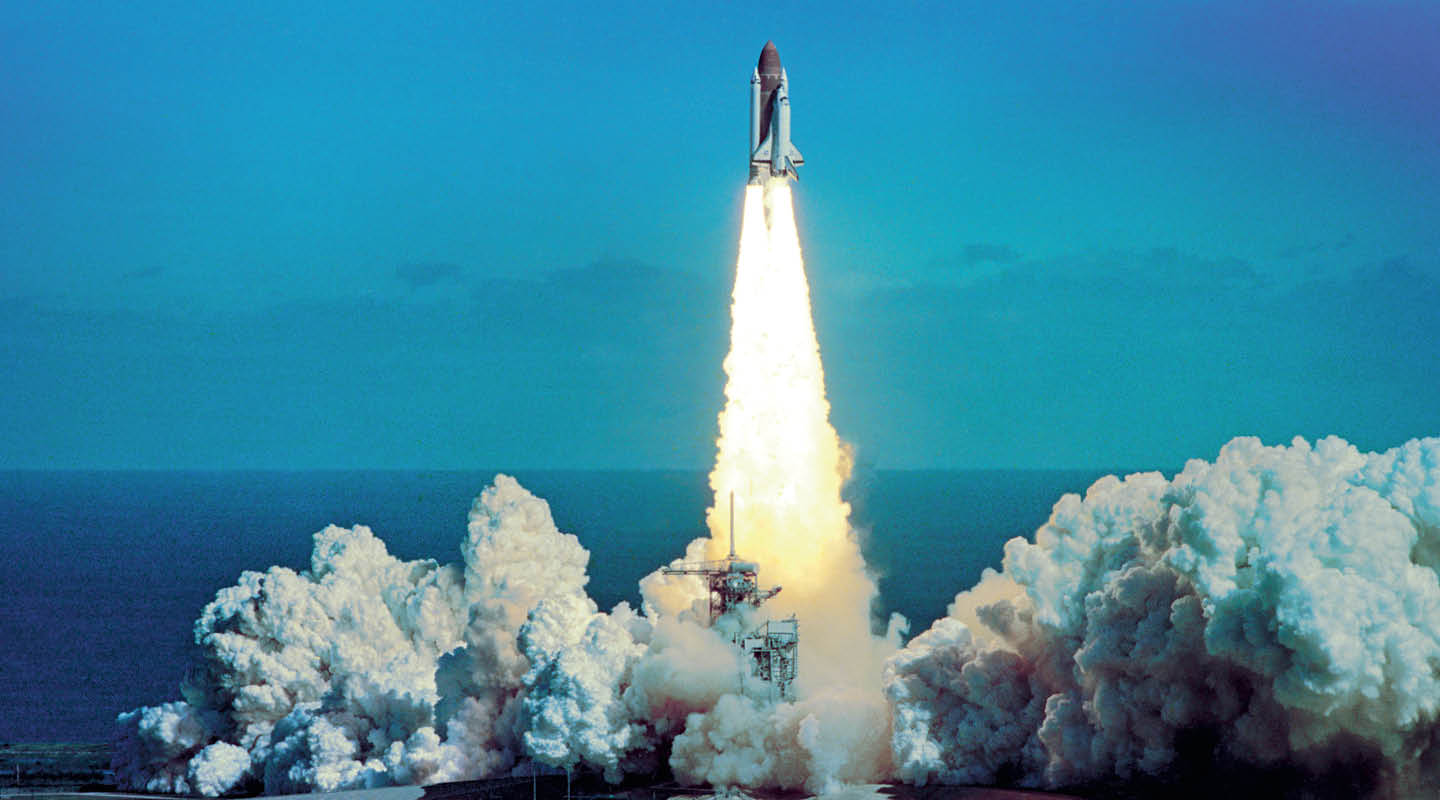
It was January 28, 1986. The morning was unusually chilly for Florida. The space shuttle Challenger was about to blast off. Seven crew members were strapped into their seats.
In many ways, this would be a typical mission. The American space shuttle program was now in its 14th year. The Challenger would be launched into space. It would orbit Earth and land back on the ground.
But there was something different about this mission.
One of the astronauts wasn’t actually an astronaut. Her name was Christa McAuliffe. She was a 37-year-old high school teacher from New Hampshire. And she was the first private citizen chosen for a space mission.
The whole country was excited. Just imagine! A teacher going to space! Kids in classrooms sat in front of TVs. Crowds gathered outside the launch site in Florida. Everyone got ready for what would surely be a thrilling moment.
At 11:38 a.m., the rockets fired. The shuttle rose slowly at first. It gained speed, rising higher and higher in the winter sun.
Then disaster struck.
Fire shot out from one of the rockets. A fuel tank exploded.
On the ground, people were confused. Then the awful truth became clear: The Challenger had been destroyed.
All seven crew members had been lost.
How could this have happened?
10, 9, 8, 7 . . .
It was January 28, 1986. The morning was unusually cold for Florida. The space shuttle Challenger was about to blast off. Seven crew members were strapped into their seats.
In many ways, this was a normal mission. The American space shuttle program was in its 14th year. The Challenger would be launched into space. It would orbit Earth and then land.
But there was something different about this mission.
One crew member wasn’t an astronaut. Her name was Christa McAuliffe. She was a 37-year-old teacher from New Hampshire. She was the first private citizen chosen for a space mission.
The whole country was excited. Just imagine! A teacher going to space! Kids in classrooms sat in front of TVs. Crowds gathered outside the launch site in Florida. Everyone got ready for a thrilling moment.
At 11:38 a.m., the rockets fired. The shuttle rose slowly at first. Then it sped up. It rose higher and higher in the air.
Then disaster struck.
Fire shot from one of the rockets. A fuel tank exploded.
On the ground, people were confused. Then they understood: The shuttle had been destroyed. All seven crew members had died.
How could this have happened?
10, 9, 8, 7 . . .
It was January 28, 1986. The morning was unusually chilly for Florida. The space shuttle Challenger was about to blast off. Seven crew members were strapped into their seats.
In many ways, this would be a typical mission. The American space shuttle program was now in its 14th year. The Challenger would be launched into space. It would orbit Earth and land back on the ground.
But there was something different about this mission.
One of the astronauts, Christa McAuliffe, wasn’t actually an astronaut. She was a 37-year-old high school teacher from New Hampshire, and she was the first private citizen chosen for a space mission.
The entire country was excited. Just imagine! A teacher going to space! Kids in classrooms sat in front of TVs, and crowds gathered outside the launch site in Florida. Everyone got ready for what would surely be a thrilling moment.
At 11:38 a.m., the rockets fired. The shuttle rose slowly at first. It gained speed, rising higher and higher in the winter sun.
Then disaster struck.
Fire shot out from one of the rockets. A fuel tank exploded.
On the ground, people were confused. Then the awful truth became clear: The Challenger had been destroyed.