
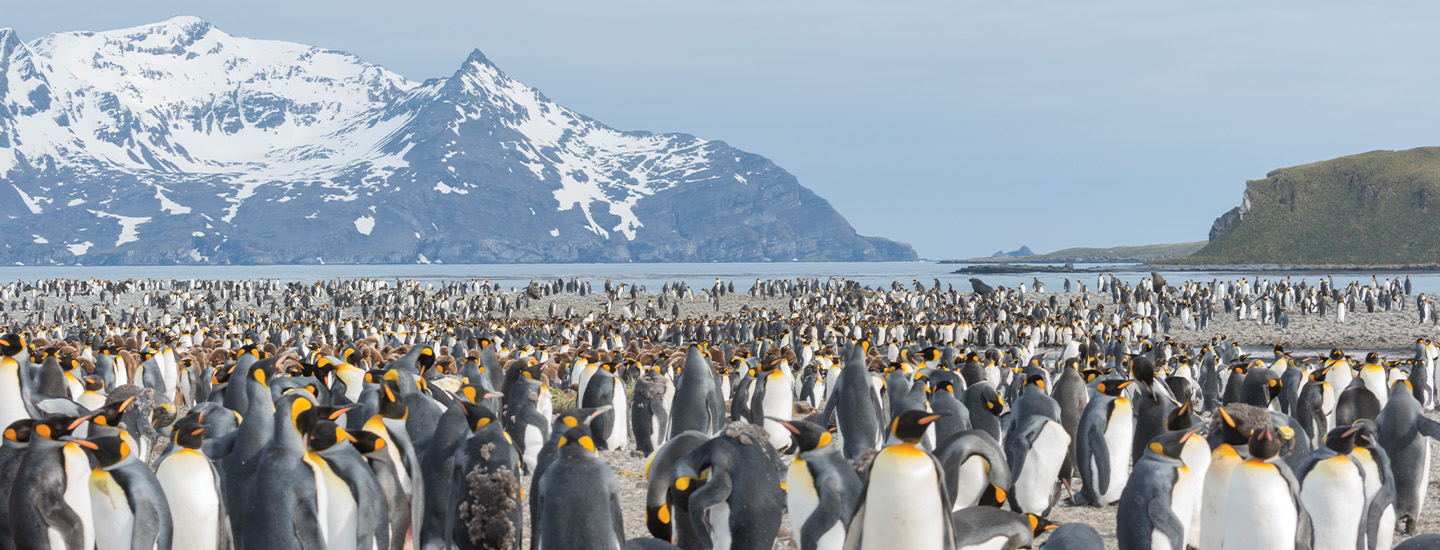

José Gieskes Fotografie/Getty Images 

CCSS

W.2

Standards

Can Penguin Poop Save The Planet?

Not exactly—but scientists recently discovered it could help keep Antarctica cool  

 Jim McMahon/Mapman ® 

Where is Antarctica?
Antarctica is the coldest and fifth-largest continent on Earth. It’s located around the South Pole and is covered in ice.

    Imagine you’re exploring Antarctica. All you see is ice and snow. Bright-blue sky meets bright-white ground. It feels like the most peaceful place on Earth.

    But as you walk over a hill, you hear a strange sound. 

    Squawk, squawk. Squawk, squawk. 

    Then you see them: tens of thousands of penguins. The sight is overwhelming. So is the smell. After all, a lot of penguins means a lot of penguin poop. 

    At first, it might look like the penguins are spoiling this beautiful environment. Their piles of stinky poop are everywhere

    But the truth is, that poop might just serve a surprising—and important—purpose.

    Imagine you’re exploring Antarctica. All you see is ice and snow. Bright-blue sky meets bright-white ground. It feels like the most peaceful place on Earth.

    But as you walk over a hill, you hear a strange sound: Squawk, squawk. Squawk, squawk.

    Then you see them: tens of thousands of penguins. The sight is a surprise. So is the smell. After all, a lot of penguins means a lot of penguin poop.

    It might seem like the penguins are ruining this place. Their poop is everywhere.

    But that poop might just serve a purpose.

    Imagine you’re exploring Antarctica. All you see is ice and snow. Bright-blue sky meets bright-white ground. It feels like the most peaceful place on Earth.

    But as you walk over a hill, you hear a strange sound.

    Squawk, squawk. Squawk, squawk.

    Then you see them: tens of thousands of penguins. The sight is overwhelming—and so is the smell. After all, a lot of penguins means a lot of penguin poop.

    At first, it might appear that the penguins are spoiling this beautiful environment. Their piles of stinky poop are everywhere.

    But actually, that poop might just serve a surprising—and important—purpose.

Melting Ice

    To understand the power of penguin poop, you first have to understand climate change. Climate is the usual weather in a place. And Earth’s climate is always changing. It naturally warms and cools over thousands—even millions—of years.

    But right now, experts say, humans are making Earth warm up faster than ever before. As a result, the huge sheets of ice that cover parts of our planet are melting. That water goes into the oceans, making them rise. Rising oceans put millions of people at risk for flooding.

    About 136 billion tons of ice melt every year in Antarctica alone. Experts are rushing to figure out how to slow that down.

    That’s where penguin poop comes in.

    Many scientists are worried about climate change. Climate is the usual weather in a place. Earth’s climate is always changing. It warms and cools over thousands of years.

    But right now, experts say, humans are making Earth warm up faster than ever before. As a result, huge sheets of ice that cover parts of our planet are melting. That water goes into the oceans, making them rise. That puts millions of people at risk for flooding.

    About 136 billion tons of ice melt every year in Antarctica. Experts want to find a way to slow that down.

    Can penguin poop help?

    To understand the power of penguin poop, you first have to understand climate change. Climate is the usual weather in a place. Earth’s climate is always changing, naturally warming and cooling over thousands—even millions—of years.

    But right now, according to experts, humans are making Earth warm up faster than ever before. As a result, the massive sheets of ice that cover parts of our planet are melting. That water goes into the oceans, making them rise and putting millions of people at risk for flooding.

    Approximately 136 billion tons of ice melt every year in Antarctica alone. Experts are rushing to figure out how to slow that down.

    That’s where penguin poop comes in.

Cloud Creators 

Gerald Corsi/Getty Image

The scientists studied a colony of Adélie penguins. Their poop is pink!

    Recently, a group of scientists studied a colony of Adélie penguins in Antarctica. They found that the penguins’ poop had a surprising effect on the environment.

    Clouds typically form when water vapor grabs onto particles in the air. Usually, those particles are dust or pollution. But those things aren’t common in Antarctica. 

    What is common? Penguin poop—and the gases it gives off. 

    Those gases mix with other gases to form particles. And those particles help form clouds. Clouds then block the sun. That helps lower the temperature.

    Matthew Boyer was the lead scientist on the study. He and other experts aren’t yet sure how these clouds affect the overall climate. To find out, more research is needed. But clearly there’s more to penguin poop than meets the eye.

    “There are connections between things that happen on our natural planet that we just don’t expect,” says Boyer. “And this is one of them.” 

    Recently, a group of scientists studied a colony of penguins in Antarctica. They found that the penguins’ poop had a surprising effect on the environment.

    Clouds typically form when water vapor grabs onto particles in the air. Those particles often are dust or pollution. But those things aren’t common in Antarctica.

    What is common? Penguin poop and the gases it gives off. Those gases mix with other gases to form particles. And those particles help form clouds. Clouds then block the sun. That helps lower the temperature.

    Matthew Boyer led the study. He isn’t sure how these clouds affect the overall climate. More research is needed. But clearly there’s more to penguin poop than meets the eye.

    “There are connections between things that happen on our natural planet that we just don’t expect,” says Boyer. “And this is one of them.” •

    A group of scientists recently studied a colony of Adélie penguins in Antarctica, and they found that the penguins’ poop had a surprising effect on the environment.

    Clouds typically form when water vapor attaches to particles in the air. Usually, those particles are dust or pollution—but those things aren’t common in Antarctica.

    What is common? Penguin poop—and the gases it gives off.

    Those gases mix with other gases to form particles. And those particles help form clouds, which help lower the temperature by blocking the sun.

    Matthew Boyer, the lead scientist on the study, and other experts aren’t yet certain how these clouds affect the overall climate. To find out, more research will be necessary. But clearly there’s more to penguin poop than meets the eye.

    “There are connections between things that happen on our natural planet that we just don’t expect,” says Boyer. “And this is one of them.” 

videos (1)
Skills Sheets (2)
Skills Sheets (2)
Leveled Articles (2)
Text-to-Speech