
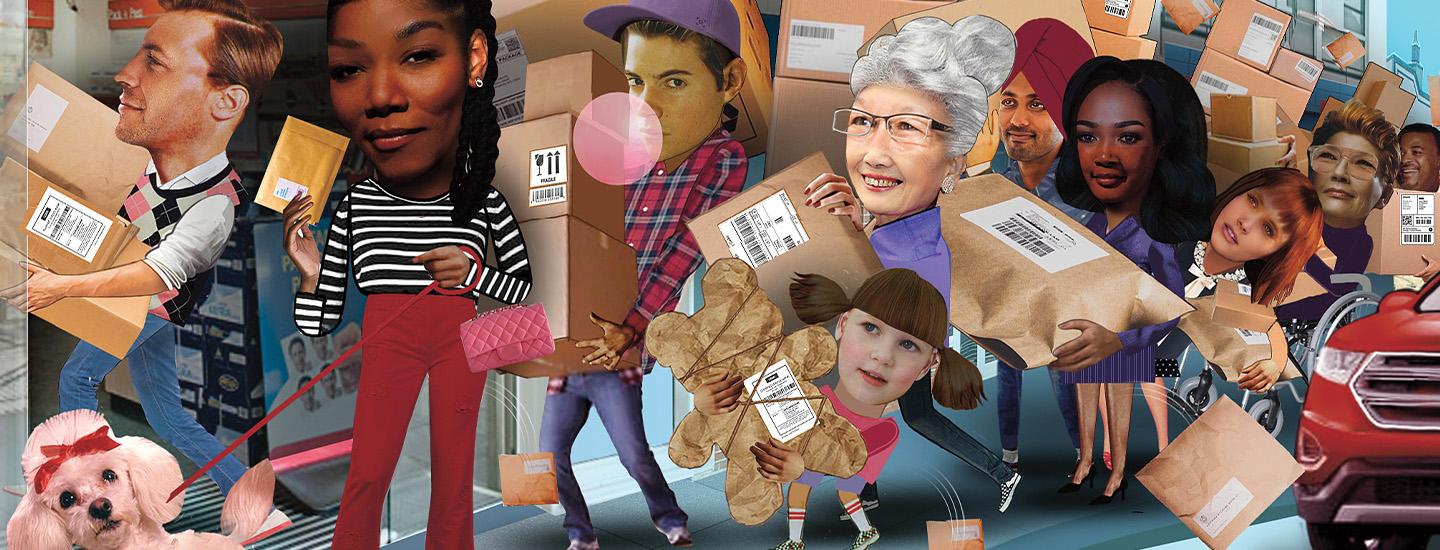

Art by Carolyn Ridsdale
Imagine you need some warm, fuzzy boots. Not so long ago, you probably would have gone to the mall. You would have tried on several styles. An hour later, you would have left with the perfect pair—one that looked and felt great.
But that’s not the way many of us shop these days.
More and more people are buying things online. In fact, online shoppers in the U.S. spent more than $1 trillion in 2024.
So now you might order boots on your phone. But when they show up, they aren’t quite right. The color looks different. The sides pinch your toes.
Luckily, returning these unwanted boots is free. Or is it?
Free returns come at a cost to our planet. Is it time to end these pricey policies?
Imagine you need some boots. Not long ago, you probably would have gone to the mall. You would have tried on boots. You would have left with a pair you loved.
But that’s not the way many of us shop now. More and more people are buying things online. Online shoppers in the U.S. spent more than $1 trillion in 2024.
So now you might order boots on your phone. But when they show up, they aren’t quite right. The color looks different. The sides pinch your toes.
At least returning them is free. Or is it? Free returns come at a cost to our planet Is it time to end these policies?
Imagine you’re looking for some warm, fuzzy boots. Not so long ago, you probably would have gone to the mall, tried on several styles, and left an hour later with the perfect pair—one that looked and felt terrific.
But that’s not the way many of us shop nowadays.
More and more people are making purchases online—in fact, online shoppers in the United States spent more than $1 trillion in 2024.
So now you might order boots on your phone—but when they arrive, they aren’t quite right. The color looks different, and the sides pinch your toes.
Fortunately, returning these unwanted boots is free. Or is it?
Free returns come at a cost to our planet.Is it time to end these pricey policies?